
Michael and Wyndo first met each other in 2025 via Substack.
Michael has a publication called Blockbuster Blueprint that helps coaches, consultants, entrepreneurs, and thought leaders use AI to create blockbuster content.
Wyndo has a publication called The AI Maker that helps professionals learn about and adopt the best AI tools, prompts, and skills.
Right away, we hit it off.
At first, our relationship was about sharing what we were learning with each other.
Then, we interviewed each other on our channels.
Michael interviewed Wyndo for Cozora:
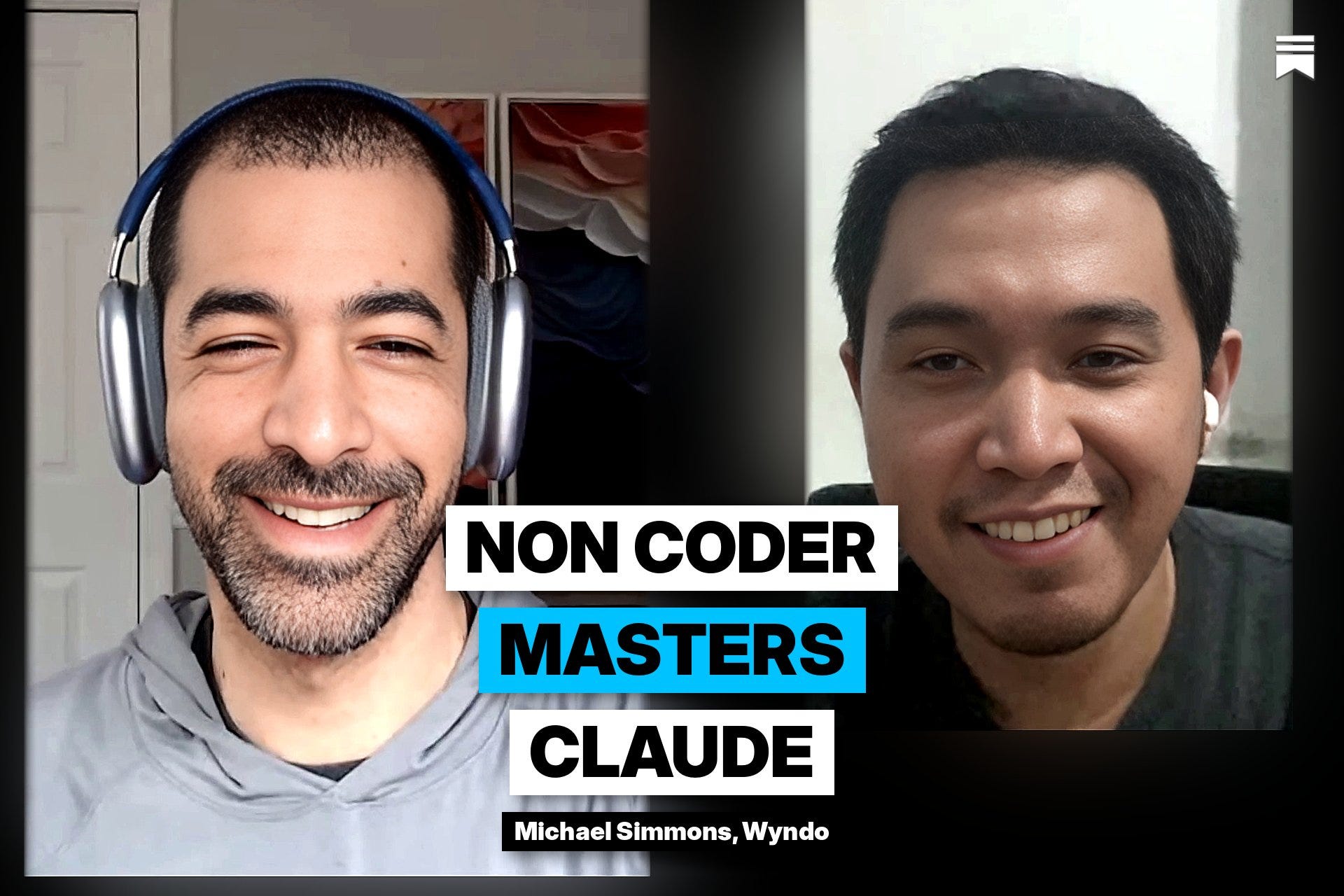
Michael was blown away by how systematic Wyndo was. He had thought deeply about and refined each component of how to use Claude code:
What to include in the core context file (Claude.md) to help every session of Claude be more productive without overwhelming the context window.
How to structure the folders so they were clear and easy to navigate.
How to develop, test, and chain skills together.
Even though Michael was an expert at Claude Code, he found himself furiously taking notes during the session.
Then, Wyndo interviewed Michael for his One Shot Show.
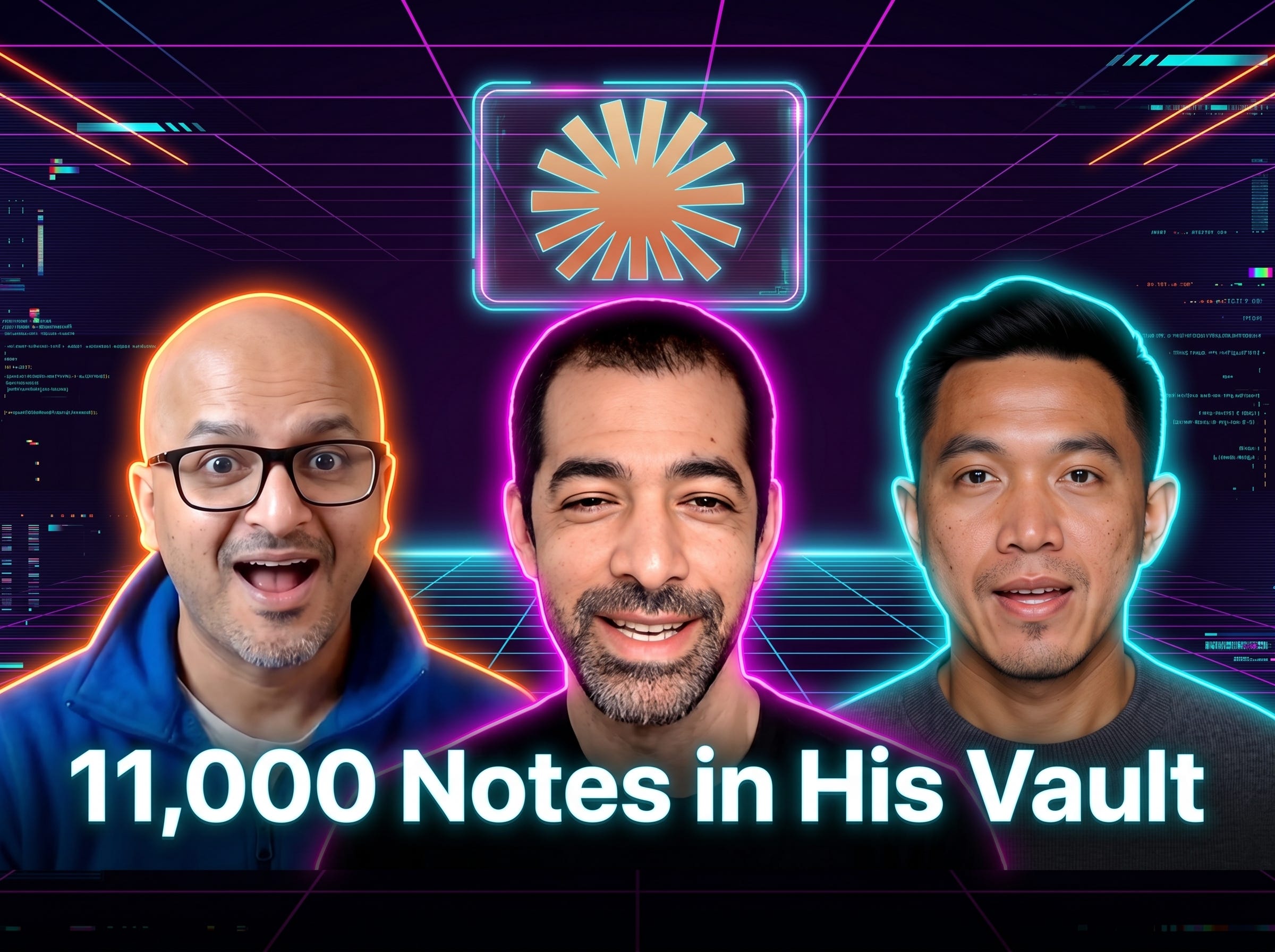
Wyndo was blown away by how strategic Michael was:
How Michael chained together 100+ skills to create blockbuster content with AI.
How Michael created comprehensive research briefs that served as the foundation for his research-backed articles.
How Michael built an AI Second Brain with 11,000 notes.
Seeing how much we complemented each other, we started exploring ways to collaborate more deeply. As we talked more, the collaboration opportunity became clear:
Helping Others Make The Shift To Agentic Work
On the one hand, using Claude Code was changing both of our lives. Switching to the agentic paradigm truly skyrocketed what each of us was able to accomplish in our work.
Naturally, we started sharing what we were learning with our audiences, and it did the same for them.
Once people got a taste of what was possible with agentic AI, they typically felt two things:
Excitement at what was possible.
Confusion on how to systematically use agentic AI
Almost universally, everyone asked the same question:
Is there a course that teaches this?
Our answer was always, "No, not yet.”
While there were many courses that popped up on vibe coding and building with AI, there was none on how to use AI for knowledge work.
That gap inspired us to fill it together.
Hence, the Agentic Academy for Knowledge Work.
Below are deeper dives on each of our stories:

Michael has been a lifelong education entrepreneur who has built multiple 7-figure businesses and whose writing has been read 100M+ times in publications like Fortune, Forbes, Entrepreneur, Inc., Harvard Business Review, and The World Economic Forum.
At age 16, he co-founded a successful web development company with Cal Newport during the dotcom boom.
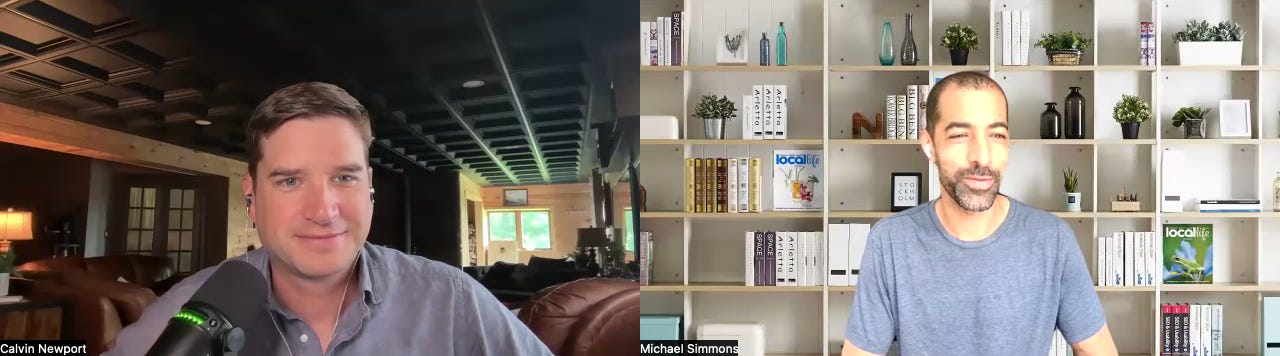
This experience gave him a lifelong imprint:
The belief that he could accomplish anything if he worked hard, learned, followed his passion, and used the latest technologies.
In college, he pivoted to thought leadership.
First, he started journaling for an hour every single day. A year later, he started writing for publications like Entrepreneur Magazine. A year after that, he self-published a book:
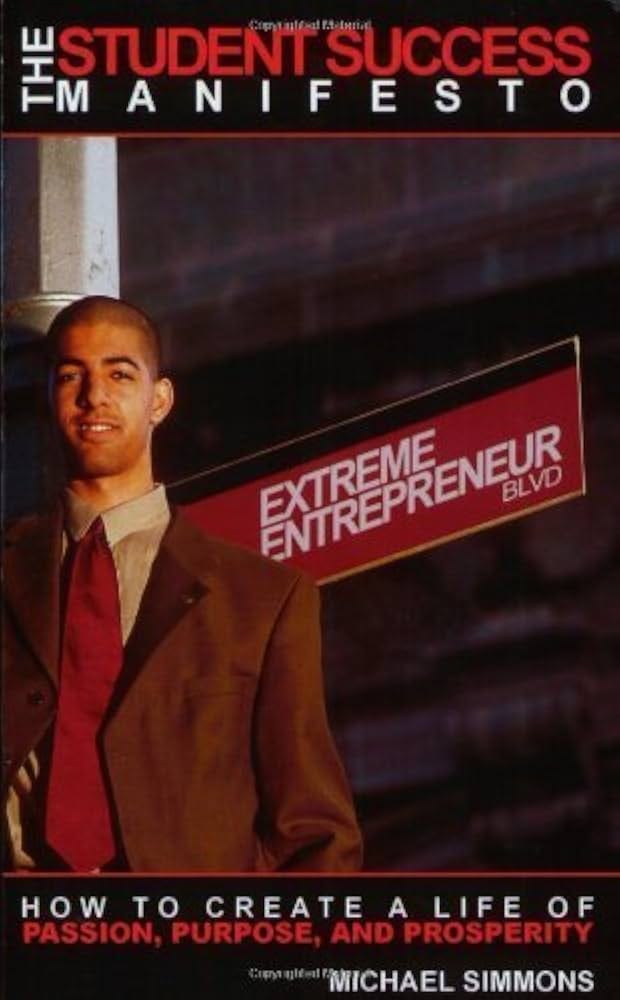
After graduating from college, Michael and his girlfriend (now wife) launched a nationwide entrepreneurship tour.
Over the next 8 years, their tour bus visited 450+ colleges and universities conducting half-day conferences with the country’s top young entrepreneurs.

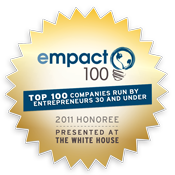
During this period, they also conducted large annual conferences at the White House and the United Nations.
In 2014, Michael pivoted away from live events to full-time writing to follow a lifelong curiosity
How do you create ideas so good that they change people’s lives and spread across the world?
This question led him to read a book that changed his life:
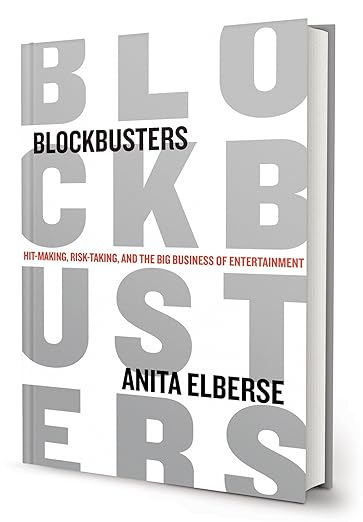
The book convinced him that the secret to creating writing that mattered was attempting to make each article he wrote a blockbuster. Fast forward 12 years, and his writing has been featured in Fortune, Harvard Business Review, Forbes, TIME, and the World Economic Forum, and has been read 100M+ times.
In 2023, Michael shifted to going all-in on AI
After experiencing multiple technology booms from the inside (dotcom, crypto), he gained the conviction that AI would change everything.
Over the last three years, he has been sharing writing, prompts, and courses that help knowledge workers, thought leaders, experts, and entrepreneurs use AI to be more productive and to create blockbuster thought leadership.
Wyndo spent about 10 years at tech companies, in growth and product, helping them expand their product and customer bases. He was good at it, and he was close to how big things got built. But it was always someone else’s vision, on someone else’s timeline.
When he left to build something of his own, AI was the only thing anyone could talk about. And the more he listened, the more one thing nagged at him. Every conversation was about the technology itself:
How smart the newest model was.
What it could generate.
Which benchmark it had just beaten.
Almost nobody was answering the question that actually matters to a normal person trying to get through a workday.
Then what?
Sure, AI could draft an email or generate an image. But those are self-contained tasks, the kind anyone can pull from any AI in a single prompt. The work that actually carries weight in a real job is messier than that: a marketing campaign that has to fit your brand and hit this quarter’s targets, an analysis that has to reflect how your business really runs and where it is trying to go, a plan that has to hold up against goals and constraints only you know.
That work is not just about producing something. It is about producing something that fits everything around it. Generic AI could not do that, because it knew nothing about your standards, your priorities, or the way you make calls. The real question was whether you could hand all of that to it, so it could do the work the way you would. That was what nobody was answering.
So he went looking for an answer he could trust, could not find one, and decided to work it out in the open.
That became AI Maker.
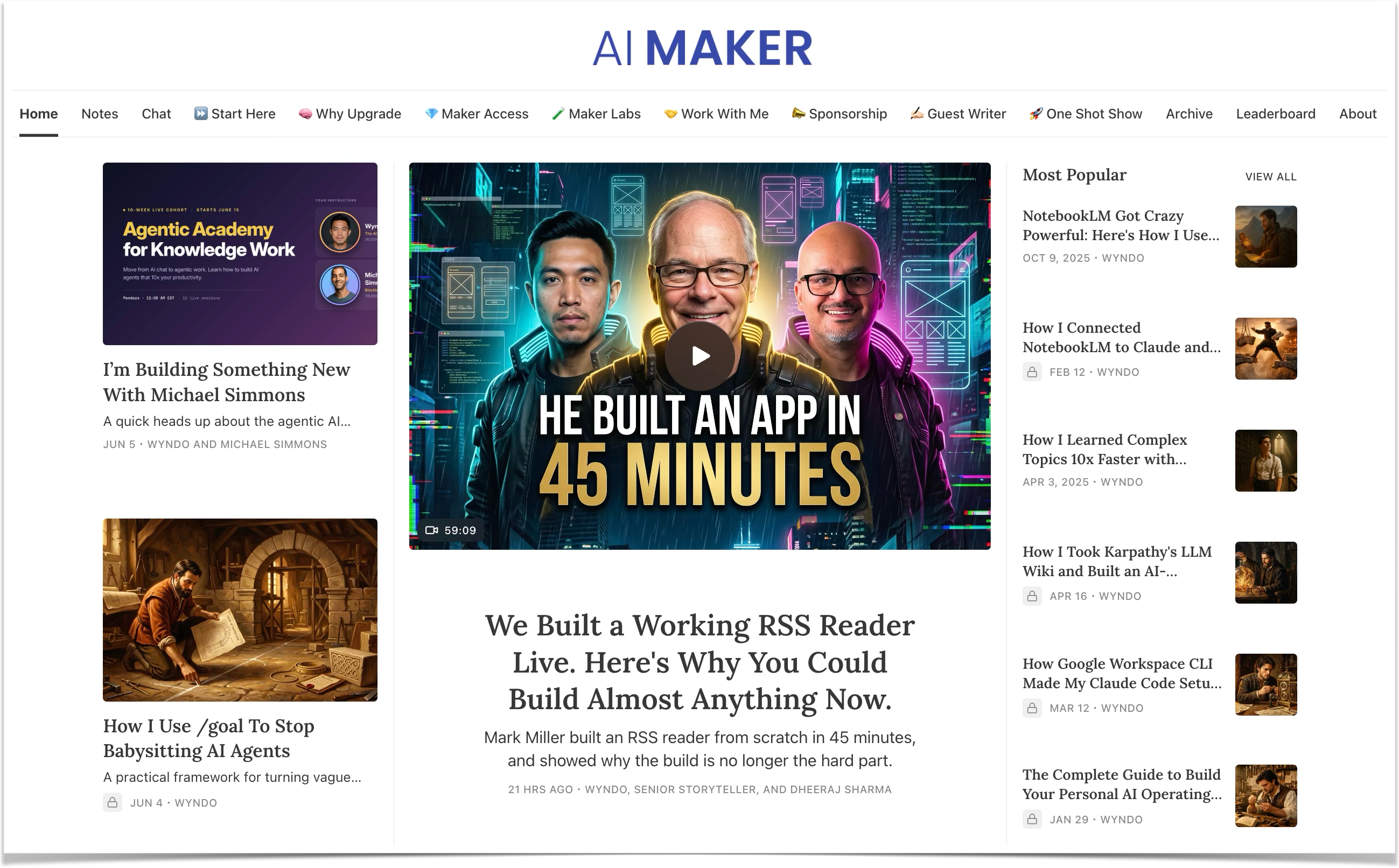
The bet behind it was simple:
The fastest way to truly learn something is to teach it while you are still figuring it out.
So Wyndo ran AI system after AI system through his own work, and wrote up only the ones that survived contact with reality. No theory. No “10 prompts that will change your life.” If he could not show, step by step, how something fit into real work, it never made the newsletter. That rule still governs everything he publishes.
He built it with nothing underneath him. No audience, no email list, not a single contact imported from anywhere. Just him, publishing experiments in public and keeping whatever worked.
In a year, it grew past 21,000 readers and into the top 50 of Substack’s Technology category, which he still finds a little absurd to say out loud, given it started from a blank page.
Then his own way of working quietly broke open.
Like everyone else, Wyndo started out treating AI as a chatbot. Ask, copy, paste, re-prompt, reset, repeat. Every new session began from zero, as if the AI had never met him. The real break came in the middle of last year, with Claude Code. For the first time, the AI understood not just his words but his intent, as long as he gave it real context: what he was doing, why, and what a good result looked like. It could reach into the files and apps where his work actually happened.
That changed the whole shape of his day. Wyndo stopped being the middleman, the human ferrying text back and forth between a chat box and his real tools. He rebuilt his entire newsletter operation inside the agent. Now, when he wants to research, draft, or pressure-test a new idea, the agent already knows him. It knows his work, his standards, and how he makes decisions, so the answers come back grounded in his own files instead of made up. He sets the direction and keeps the judgment. The agent carries the rest.
But ask him what actually keeps him doing this, and he will not point to the systems. He will point to the people.
Once a month, Wyndo sits down with his founding members and some clients. Many of them want to build this for themselves and have no idea where to start. So he walks them through it, live: how to set up the project, build the context, get the agent doing their real work.
Then the messages start coming back:
“This is the most productive I have ever been.”
“This is speeding up my work more than I can explain.”
“I cannot imagine going back to how I worked before.”
Knowing he had a direct hand in changing how someone works, and what their days feel like, is the part that makes all of it worth it.
That is the real reason Agentic Academy exists for him. It runs deeper than helping people clear a to-do list faster. He wants others to feel the same shift he felt, where the busywork falls away and the time it frees up goes to the thinking, the building, and the work that makes them feel alive.
Why the two of us
Put Michael and Wyndo together and you get both halves of what this shift takes. One has pressure-tested these systems inside a real business, day after day, until only the ones that work survive. The other has spent twenty years making complicated ideas land for millions of people.
That pairing is what this actually asks for, because agentic work is easy to demo and hard to adopt, and a guide who can only do one of those leaves you halfway there.
If you have read this far, you are probably feeling both of the things almost everyone feels at this point: real excitement about what agents could do for your work, and no clear sense of how to get there. That is exactly who this is for. Knowledge workers who want their judgment to count for more, and who would gladly hand the busywork to something that finally knows how they work.
We have both made this shift. We would like to walk you through it.
